None Justified By Law
Ministries > Dr. Barnhouse and the Bible with Dr. Donald Grey Barnhouse
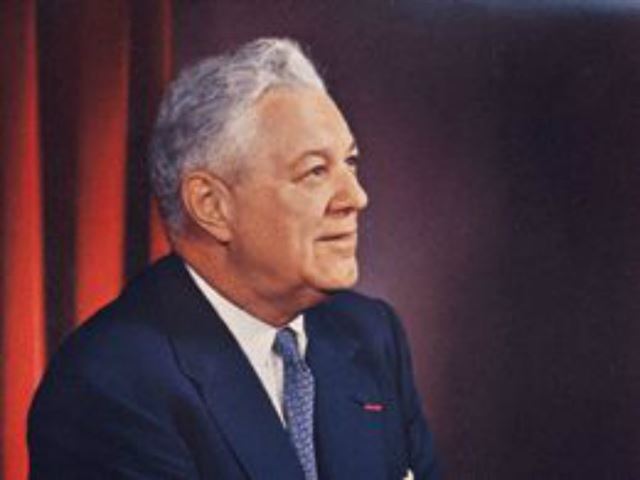
Demonstrating Dr. Barnhouse’s acute understanding of Romans and his heart for effective preaching, these messages skillful and reverently expound even the most difficult passages in a clear way. Dr. Barnhouse's concern for a universal appreciation of the epistle fuels this series and invites all listeners into a deeper understanding of the life-changing message of Romans.
Announcer: The Alliance of Confessing Evangelicals presents the timeless teaching of Dr. Donald Grey Barnhouse.
Dr. Donald Grey Barnhouse: In England, they give slightly different names to many things, and some of them can be quite revealing. The 12-inch measuring stick, which we call a ruler, they call a straight edge. Phillips, in his translation of the epistles, uses this word in our text. No man can justify himself before God by a perfect performance of the law's demands. Indeed, it is the straight edge of the law that shows us how crooked we are. It is indeed a wonderful translation, for it gets to the very heart of the purpose of the law as given by God.
Guest (Female): God's word is good for God began to teach, rebuke, correct, and train. Equipped by him we can pursue the work God has for us to do. The word is all a Christian needs. Hope in grace can do good.
Announcer: Over a half a century ago, the late Dr. Donald Grey Barnhouse, then pastor of 10th Presbyterian Church in Philadelphia, saw the need to spread God's word beyond the hearing of his local congregation. He started the radio outreach which has become known as Dr. Barnhouse and the Bible. The application of God's word as taught by Dr. Barnhouse is as relevant today as when he first taught over the radio airwaves decades ago. The message we will be featuring on today's edition of Dr. Barnhouse and the Bible is entitled None Justified by Law. If you looked in the mirror and saw dirt on your face, would you begin to scrub your face with the mirror? No. The proper use of the mirror is to reveal your dirty face and point to your need for soap and water. Likewise, the proper use of God's law is to reveal how filthy and sinful we are and to point us to the blood of Christ for spiritual cleansing. Why is it so dangerous to try keeping the law as a way to be right with God? The scripture text for this edition of Dr. Barnhouse and the Bible is Romans chapter 3 and verse 20. Here again is Dr. Donald Grey Barnhouse with the message entitled, None Justified by Law.
Dr. Donald Grey Barnhouse: Through the Lord Jesus Christ, we come unto thee, our Father and our God, and in the Holy Spirit. We thank thee for opening the eyes of the spiritually blind, that in thy light we might see the truth. We pray thee for all who listen in this hour, that there may come strength to the weak, courage to the faint, sight to the blind, life to the dead, that men might rise from their unbelief to the life of faith in the Lord Jesus Christ, in whose name and for whose sake we ask it. Amen. The Epistle to the Romans has as one of its greatest themes the inability of the law of God to make men righteous. Time and again, this thought is brought forth and examined under one light and then under another. One of the strongest statements of the principle is before us in our study of the 20th verse of the third chapter. Therefore, by the deeds of the law, there shall no flesh be justified in his sight, for by the law is the knowledge of sin. Here then is the statement of one thing which the law of God cannot do, and a statement of one thing that the law of God can do. It is sad to think of the multitudes who refuse the law of God for use in the sense that he intended it to be used, and attempt to use the law for something which God has plainly declared it may not be used. Newell has brought out an excellent thought in his comment on this verse. He says that here we meet by far the most difficult divine utterance for the human heart to yield to that we have met in the entire epistle. Even those without law, Gentiles that have not the law of Moses, we find throughout history so committed to their own ideas of what is right and what will propitiate the demons that they worship, that they will desperately fight for their convictions. He reminds us of illustrations of this principle in Paul's experiences at Lystra and at Ephesus, and how much more difficult the task becomes in dealing with those who, as God's ancient people, know that they have had a direct revelation from God. Thou shalt and thou shalt not, and he that doeth these things shall live by them. And summing up the rest of his argument, we find it true that it is only with great difficulty that heathen are moved to abandon the wild follies of their idolatry. How much more difficult then to move men away from something which God himself has given and which they think they are holding in the manner in which God wished it held, while in reality they have grasped a distorted meaning of it and must abandon it entirely before they can take the truth in its true meaning. It is much easier to detach a Chinese from the Analects of Confucius and bring him to the knowledge of Christ than it is to detach some people born within the sphere of Christendom from their hope in salvation by the Golden Rule. They are astonished when you tell them that Christ did not give the Golden Rule as a formula for salvation, but as a means of revealing to man that he was fundamentally crooked and that therefore he needed a power outside himself to give him righteousness. At the risk of being greatly misunderstood, I wish to set forth the fact that God never gave the law of Moses with the thought that anyone would ever keep it, and the Lord Jesus never gave the Sermon on the Mount with the thought that anyone would ever live by it in perfection. In fact, these laws were not even goals to aim at. The law was a standard that was given in order to convince men of their own hopeless incapacity, so that they might come to God in grace. The law of God is like a mirror. Now, the purpose of a mirror is to reveal to you that your face is dirty, but the purpose of a mirror is not to wash your face. When you look in a mirror and find that your face is dirty, you do not then reach to take the mirror off the wall and attempt to rub it on your face as a cleansing agent. The purpose of the mirror is to drive you to the water. Any other use of the mirror is plain folly. At the same time that God gave the law, God gave the lamb. At the same time that God gave Moses, God gave Aaron. At the same time that God said, "Thou shalt not," he said in effect, "But I know you will, and here's how to get out of it." Several years ago, I was preaching in a certain city in the United States. I presented the basic elements of salvation through faith in the Lord Jesus Christ as man's only hope of righteousness. When I had finished speaking, those in the room who were fervent Christians came to express their joy in the giving forth of the gospel in such circumstances, and others thanked me for being so straightforward in the expression of my convictions and of bringing a serious note to them. Others, of course, made for the door, saying nothing. But while some were speaking to me, a friend whispered in my ear, "Do you see the short man in the gray suit that's coming toward us? He's a well-known millionaire, and he always tries to put the visiting preachers on the spot. He has a trick question that he's going to ask you. He will say..." And at that point, the man arrived and spoke to me. I knew that something was coming, but I did not know what. He introduced himself, saying, "I want to ask you a definite question, and I would like you to assure me that you will give me a yes or no answer before I ask my question." I replied that there were some questions that could not be answered with a yes or no, and he seemed annoyed that I took that point of view. But I reminded him of the old joke question, have you stopped beating your wife, yes or no? If you answer yes, it means that you were beating her but have now stopped, and if you answer no, it means that you are still beating her. He acknowledged the possibility of a question that would be difficult to answer by a direct affirmative or negative, but he asked me to do the best that I could. He then stated that his code was to live up to the law of the Old Testament, and he wanted to know if I thought that he would go to hell if he did not believe in Jesus Christ. I asked him what man in his Old Testament he thought was the greatest man, and he replied without hesitation that it was Moses. My answer then, I said, was that I truly believed that he could not go to heaven unless he went there in the same way that Moses got there, but that I believed that if he did believe as Moses believed, he would go to heaven. A smile wreathed his face and he said, Doctor, I'm glad you're broad-minded. But I cut into his smiles with a sharp question. How did Moses get to heaven? And he answered as though it were a most simple question. Why, by keeping the law of God, of course. I said to him, Listen to me. In the presence of these witnesses, I make you a firm offer to raise $5,000 and contribute it to the Red Cross or any charity which you care to name, if you will show me one verse in the Old Testament that says that Moses got to heaven by keeping the law. And I held out my Bible toward him. The man looked at the Bible but made no effort to touch it. In a second he said, but in a tone that was much more wavering, well, well, how did Moses get to heaven? And I said to him, Moses got to heaven by having his brother Aaron kill a lamb and shed its blood as an atonement for his sin. For almost all things are by the law purged with blood, and without shedding of blood there is no remission. Now, if you know the books of Moses, you know that Exodus begins with the redemption of the Lord's people by the placing of the blood on the doorposts in the Passover, and that the whole of the book of Leviticus is the setting up of the code by which sin could be removed. In Leviticus 17:11, there is the heart of the Mosaic law. For the life of the flesh is in the blood, and I have given it to you upon the altar to make an atonement for your souls, for it is the blood that maketh an atonement for the soul. He stood in silence for a moment and then said, thank you, and turned and walked away. Oh, how terrible it is that men will reach for the part of Moses' law that can only condemn them and will refuse the one part that would save them. How terrible it is that men reach for the one part of Jesus' teaching which most condemns them and refuse the ransom which he prepared by dying upon the cross. How terrible it is that men reach for what the church created as aids for Christian living, as they thought, and attached themselves to rites and ceremonies, fastings and self-denials, the church year, the baptisms, the Lenten services, but refused to lay hold upon the offer of eternal life through simple faith in the shed blood of the Savior, Son of God, who came to seek and to save that which was lost, and who came to give his life a ransom for many. If the law is looked upon as being a standard of living, then men will naturally come to the place where they will consider it proper for God to take into heaven those that come nearest to a human approximation of the demands of that law. They think that God, like their teachers, will have a passing mark, and that most people in the class will get by, and that there will be few flunks, especially if some get an A for sincerity and no mark at all for their failures. But God, by the very nature of his being, cannot pass anyone who has anything less than perfection. If God would let into heaven people who were 99 and 44 one hundredths percent righteous, then heaven would be 56 one hundredths of a percent dirty. The cross of Jesus Christ is a sanitary measure that will keep heaven from being dirty. God must mark by perfection, or he would not be God. You remember the story of little Johnny, who complained to the teacher about his mark in an examination. She asked him what the difficulty was, and he replied that he thought he ought to get something better than a zero on a certain question. When he was asked about it, he said, well, the question was, what is 8 times 7? And Willie had 8 times 7 is 46, and I had 8 times 7 is 54. He was 10 wrong, and I was only 2 wrong. So I think I ought to get a better mark. Now, we may smile at the simplicity of it, but there are thousands of people who try the same line of talk with God. They are not perfect, oh no, they know that, but that they think they should have a better mark, a better grade than someone else, because they think they have come closer to the right answers than has someone else. But just as there are a million whole numbers from one to a million, yet only one right answer to the problem of eight times seven, so there are a million human attitudes toward the problem of heaven and the problem of sin, yet only one right answer from the point of view of God himself as to what constitutes entrance into heaven. And God's answer has nothing whatsoever to do with keeping a code, whether it be that of Moses or even that of Christ himself. Our text states that no man shall be declared righteous on the basis of any keeping of the law, and further states that the purpose of the law is something quite different, namely to reveal to man what his sinfulness really is, and this in order that he might be turned to Christ, as the following verses will show. The law was given to reveal the sin of man. It was pure white in order to reveal to man how off color were his pretensions. It was perfection set forth to reveal imperfection. It was moral height marked up to show men that they could never grow to pass divine demands. It was a weight in the scales meant to show man the futility of weighing his own deeds in the balance against God's perfection. It was the expression of the humanly impossible in order to show the worthlessness of the humanly possible. It was a presentation of the divine account in order to throw man's worthless assets into bankruptcy. It was an infinite demand made of finite men. It was the necessary prelude to grace because man would not take the provision of God until he was assured that he could do nothing for himself. So the law was given that every mouth might be stopped. The law was the straight edge to show man that he was crooked. Now it's amazing in the light of this true purpose of the law that man could think it possible for him to do something that could fulfill the demands of the law. Yet not only a few, but we are forced to conclude that vast multitudes take the attitude that they're still able to do something for themselves. The law was summed up with an infinite finality that should have caused men to rush to the grace of God, but they did not thus react. The Lord said, "Thou shalt love the Lord thy God with all thine heart, with all thy soul, and with all thy might." And again he said, "Thou shalt love thy neighbor as thyself." Now it's almost ludicrous for one to believe that he has ever fulfilled either of these injunctions from the Lord. It's pitiful indeed for him to think that he has in any way measured up to fulfillment. Yet such is the arrogance of men. They know there is a God and know that they must one day meet him and expect to meet him with the pennies of their own accomplishment and counterfeit at that. How terrible will be the day of the revelation of their deception. When we turn to the New Testament, we find that all these arguments are a part of the Sermon on the Mount as they were a part of the law. In fact, if we study the attitudes of the men whom Christ faced at the outset of his ministry, we can understand the true purpose of the Sermon on the Mount. Of it we can say, as we did of the law, that God never expected any man in this world to fulfill its provisions. Being ignorant of the true nature of God's righteousness and his demands, the leaders of the ancient people substituted something false for the law of God, and it was necessary for Christ to tear it away before he could reveal to them the nature of God's holiness and the nature of their sin. Through the centuries that had passed between Moses and Christ, the leaders had nullified the word of God through their tradition. Christ later said that they had made the word of God of none effect through their tradition. What they had done was to whittle down the true nature of the law, to make it something far different from that which God had intended it to be, and then they had put moral wedgies in their shoes to make themselves appear morally taller. When they had brought themselves up to an approximation of their idea of the law, they were filled with gigantic pride that they were now in a position where God would have to take them into his heaven on their terms. They thought that they were doing God a favor and did not understand that their position was a monstrous illustration of the evil nature of man and a revelation of how far man had really gone in his departure from God. Thus Christ began the Sermon on the Mount with a condemning word, blessed are the poor in spirit, for theirs is the kingdom of heaven. Without any violation of the theology and with little violation of the Greek, we might translate this, blessed are the spiritually bankrupt, for theirs is the kingdom of heaven. It was a condemnation of any who thought that they might satisfy the demands of God by something that they could do themselves. It should have brought men immediately to the realization that salvation was by grace alone, and that human works could have nothing at all to do with it. They had interpreted the law in one way. God forced them to return to the law as an instrument of condemnation. He said to them, in effect, you have interpreted Moses' commandment, thou shalt not kill, as meaning thou shalt not actually put a man to death. But I say unto you that you must interpret this as a condemnation of the thoughts of the heart, so that you must understand the law henceforth in such a way that you will realize that the slightest motion of hatred is the revelation of murder in the heart, and that you shall realize therefore that you are all transgressors. Finally, as though he drew forth the longest and sharpest sword from the armory of God, he cried out with tones that showed forth the wrath of God against unrighteousness. Be ye therefore perfect, even as your heavenly Father is perfect. In other words, do not think you are going to get into my heaven by anything you do. The law cannot bring righteousness. If you are going to think for a moment that you can get into heaven on the basis of something that you do, then I declare unto you with all the authority of God that you must produce a perfection that is the equal of God's perfection. In the Old Testament, the law had been given with a constant reiteration of the demands, be ye holy for I am holy, be ye holy for I am holy. The Lord Jesus, by the Sermon on the Mount, restores this standard and calls men to see that the way into heaven is either by furnishing a perfection that is the equal of God's own holiness of being, or by turning away from the demands of the law in order that righteousness may be established by the grace that he will manifest through the shedding of his blood on the cross. What folly for men to think that the world can somehow be brought to righteousness by talking about man's accomplishment of the Sermon on the Mount. It's foolish to think that the political life of the world, the moral life of the world, the commercial life of the world, yes, the religious life of the world, or any other phase of the world's life that you care to name, may be brought to righteousness by the efforts of men. Take the 11th chapter of Isaiah, which says that the lion shall lie down with a lamb. Go and read it to the lions in the zoological garden. Tell the lion that God's word says that he's to lie down with the lamb. The lion will roar and say that he's tired of horse meat and would like to have some lamb, but he wants that lamb to devour. He does not want that lamb alive as a companion. In order to turn the lion from his natural appetite for flesh, it will be necessary to change his nature. Then the 11th of Isaiah will come into its fulfillment. And in order to make mankind corrupt in all his ways and deeds, live up to the requirements of the Sermon on the Mount, it will be necessary for the miracle of regeneration to plant within him the new nature, the life of Christ, coupled with the miracle of transformation and resurrection, which will leave his old nature behind forever. Then you may expect men to live under the precepts of the Sermon on the Mount, and never until then. It is by the straight edge of the law of God, whether expressed by Moses or reaffirmed by our Lord himself, that man may know how crooked he really is, and may turn from the folly of self-effort to the reality of the life of faith in Christ, which will furnish to us a power which we can never have of ourselves, and which will act within us when we are controlled by it. May God slay us with the law in order that we may be raised from the dead by the gospel. For this is the true relationship of the two. Before God can ever give us the gospel, he must slay us with the law. The gospel is the power of resurrection. The law is the power of condemnation. And when the two are put together, then they serve their proper purposes. Are you willing to allow God's law to slay you, to stand before him admitting that you have absolutely nothing of yourself, and that you have never, never fulfilled the law's demands. And then you can come to the place where you receive Christ as your Savior. And we pray thee, our God, that the Holy Spirit may do his work within us in this hour. May we see the depth of the insult to thee, of any offer of human character to take the place of divine righteousness. And may we behold thy righteousness in the expressions of thy law, in order that we may turn to thy rich grace and receive the life that thou dost give through Jesus Christ, our Lord. And we pray thee that thou mayest give in this hour great restlessness to any who have not been born again, so that they may know no peace until they rest in Jesus Christ. But upon thy redeemed own may thy grace, thy mercy, and thy peace abide, and a new sense of the right use of the law, and unto thee be all the glory and the majesty, the dominion and the power, now, until the Lord Jesus come again and forever. Amen.
Announcer: Let the law of God do its work of destroying any hope you have of being good enough to earn heaven. Let the law drive you to cast yourself fully on Jesus Christ for eternal life. We hope you've benefited from today's message by Dr. Barnhouse entitled None Justified by Law. You can listen to additional Bible teaching by the late Donald Grey Barnhouse anytime, anywhere around the globe via the internet by visiting the Alliance of Confessing Evangelicals website at alliancenet.org. An audio copy of today's teaching is available by calling us toll free at 1-800-488-1888. Today's message again is entitled, None Justified by Law, or simply request message number R3-13. We would also like to make available to you a free copy of Dr. Barnhouse's booklet entitled, Who's Choosing Whom? Do you view God as patiently waiting in heaven, hoping that people will turn to him in faith? If so, this booklet will open your eyes to an amazing biblical truth. Long before you chose to follow the Lord, he chose you for salvation and worked in your life to bring you to himself. Far from creating confusion or controversy, the doctrine of election and God's sovereign grace should fill us with confidence and adoration for the God who saves to the uttermost. Ask for your free copy of Who's Choosing Whom when you call or write. Dr. Barnhouse and the Bible is a radio ministry of the Alliance of Confessing Evangelicals headquartered in Philadelphia, Pennsylvania. The Alliance of Confessing Evangelicals exists to promote a biblical understanding and worldview, drawing upon the insight and wisdom of Reformation theologians from decades and even centuries gone by, we seek to provide contemporary Christian teaching materials which will equip believers to understand and meet the challenges and opportunities of our time and place. Dr. Barnhouse and the Bible comes to you through the generous gifts of our listeners. If you have benefited from this broadcast and you would like it to continue, please prayerfully consider a donation to help us keep this ministry on the air. For more information or to make a contribution to support and further our work, please contact us by writing Alliance of Confessing Evangelicals, Box 2000, Philadelphia, Pennsylvania, 19103, or call toll-free 1-800-488-1888. Visit us online at www.alliancenet.org. Be sure to ask for a free updated resource catalog featuring books, audio teachings, commentaries, booklets, daily devotionals, videos, and a wealth of other materials from outstanding Reformed teachers and theologians, including Donald Grey Barnhouse, James Montgomery Boyce, Michael Horton, and Martin Lloyd-Jones. Then join us again next time for more classic teaching on Dr. Barnhouse and the Bible.
Guest (Female): On earth, it draws our souls from death to life and rescues us from needless strife. Amazing gift on earth so hard, the life imparting birth of God.
Related Episodes
Your Right to Heaven
Monday, November 16
The Christian and the World
Sunday, November 15
Indifference to God
Friday, November 13
About Dr. Barnhouse and the Bible
Dr. Barnhouse & the Bible has been making God's Word plain for more than sixty years. His unique style springs from his careful speech, friendly manner, vivid analogies, and most of all from his faithful exposition of the Scriptures. He made the Bible relevant to the modern man. In fact his sermons have grown no less relevant to those who hear them today.
Dr. Barnhouse & the Bible is a ministry of the Alliance of Confessing Evangelicals. The Alliance exists to call the twenty-first century church to a modern reformation that recovers clarity and conviction about the great evangelical truths of the Gospel and that then seeks to proclaim these truths powerfully in our contemporary context.
About Dr. Donald Grey Barnhouse
Donald Grey Barnhouse, one of the twentieth century's outstanding American preachers, saw the need to spread God’s Word to a vast audience; he went on to start the radio broadcast which has become known as Dr. Barnhouse & the Bible. Dr. Barnhouse is best known for his many colorful illustrations of living the Christian life. His books include Teaching the Word of Truth, Life by the Son, God’s Methods for Holy Living, and more. Listen anytime at AllianceNet.org/Barnhouse.
Contact Dr. Barnhouse and the Bible with Dr. Donald Grey Barnhouse
Mailing Address
Alliance Of Confessing Evangelicals
600 Eden Road
Lancaster, PA 17601
Telephone
1-800-956-2644


